Smart Collar Clinical Relevance
Expanded Reference
Monitoring Heart Failure Using Tracking Collars - What to Know
Published on: December 5, 2025
Reviewed on: February 24, 2026
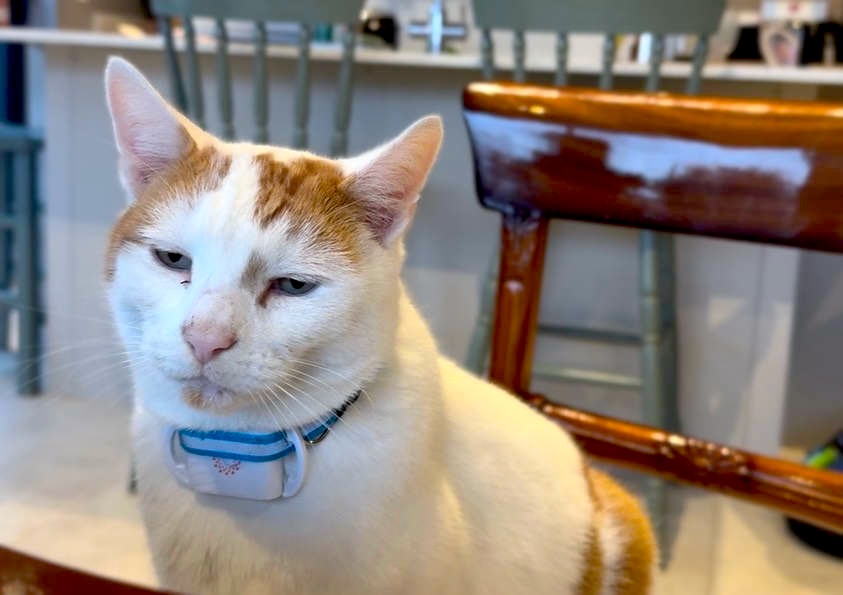
Recently we have seen a huge variety of tracking collars being released on the market for dogs and cats. They variously claim that they can track GPS position, activity, breathing rates, heart rates, drinking levels, itching levels, and sleep.
This all has huge potential benefit for our cardiac patients. It makes me very excited to see these options appearing. However, its going to take a while for information about which ones are great and which ones less effective.
So I'm hoping to keep this page roughly updated as information appears and new devices get developed
For example, it appears that the Invoxia collar doesn't work well in the UK yet.
Master Summary
Interpretation key: RR = respiratory rate; HR = heart rate; HRV = heart rate variability. "Validated" means at least one published peer-reviewed or conference validation that compares the device metric to a ground-truth (manual count, ECG, or equivalent) - note that many validations are done in healthy or controlled cohorts rather than in sick/cardic patients.
| Device | RR | HR | HRV | Validated? | Best Use Case | CHF Monitoring Score* |
|---|---|---|---|---|---|---|
| Maven Smart Collar | ✔️ accelerometer (published RR validation) | ✔️ accelerometer (publication pending) | ✖️ | ✔️ (RR validation 2024) | Daily SRR trends; early relapse detection | ⭐⭐⭐⭐⭐ |
| Invoxia BioTracker | ✔️ Large dataset. Uses radar sensors + seismocardiography (tiny vibrations) | ✔️ seismocardiography (tiny vibrations) | ✔️ (reported) Can detect atrial fibrillation with 92% accuracy. | ✔️ (large cohort dataset; limited gold-standard comparison) | Research, population baselines, long-term trending | ⭐⭐⭐ (limited geographical availability) |
| PetPace | ✔️ (acoustic / accelerometer) | ✔️ (acoustic / accelerometer) | ✔️ | Partial - some in-clinic / company-backed validation | Multi-parameter wellbeing and trend context | ⭐⭐⭐⭐ |
| Tractive | ✔️ (accelerometer) - 'beta feature' | ✔️ (accelerometer) - 'beta feature' | ✖️ | No published physiologic validation | GPS + activity; lost-dog prevention | ⭐⭐ |
| FitBark | ✖️ | ✖️ | ✖️ | Activity validation only | Rehab, weight, owner engagement | ⭐ |
| Kippy | ✖️ | ✖️ | ✖️ | Activity validation only | GPS + activity; lost-dog prevention | ⭐ |
| PitPat | ✖️ | ✖️ | ✖️ | Activity validation only | GPS + activity; lost-dog prevention | ⭐ |
| PawFit | ✖️ | ✖️ | ✖️ | Activity validation only | GPS + activity; lost-dog prevention | ⭐ |
*CHF Monitoring Score: clinician-oriented heuristic (⭐ = low relevance; ⭐⭐⭐⭐⭐ = high clinical relevance for CHF trend monitoring). This is a qualitative guide - always interpret device output in clinical context.
1. Maven Smart Collar - Full Review Here
| Category | Details |
|---|---|
| Measurements | Resting respiratory rate (RR) accelerometer based, resting heart rate (optical/PPG based), activity, sleep/restlessness, posture. |
| Cat Friendly? | Yes.Marketed and designed for use in cats (and dogs). Customer reviews specifically mention success with cats for RR, HR, and sleep monitoring. |
| Validation Status | Peer-reviewed resting RR validation study (published 2024) demonstrating small bias vs manual visual counting in apparently healthy dogs. |
| Study Summary | Shows strong agreement for resting RR under home/rest conditions; HR reported is algorithmic (not ECG). Study context: healthy dogs or controlled home conditions; disease cohorts underrepresented. |
| Strengths |
|
| Limitations |
|
| Clinical Relevance | High - most useful for resting RR trend monitoring in dogs at risk of CHF or post-CHF where relapse detection matters. |
| Best Use Case | Daily SRR trend surveillance in dogs with degenerative mitral valve disease or prior CHF episode; owner engagement and early-warning monitoring. |
Affiliate Links - support our efforts and get 10% off subscription fees:
2. Invoxia BioTracker (Minitailz / AI-Collar)
Important Note: Invoxia collar is not available in the UK currently.
| Category | Details |
|---|---|
| Measurements | Resting heart rate (HR), respiratory rate (RR), HRV, and HeartPrint™ (Lorenz/Poincaré plots for arrhythmia detection). Uses seismocardiography (SCG) to measure mechanical vibrations. GPS, activity, and sleep tracking. |
| Cat Friendly? | No/Uncertain. While lightweight (~37g), the form factor and software remain optimized for dogs. Suitability for cats is not yet clinically validated. |
| Validation Status | Validated (2025). The "AI-COLLAR" study published in Frontiers in Veterinary Science established 99.6% accuracy for HR and 98.6% for RR compared to gold-standard ECG/manual counting in a 700+ dog cohort. |
| Study Summary | Demonstrated that heart rate increases can precede RR spikes by up to 60 days in dogs with cardiac disease, providing a massive early-warning window for Stage B2 to Stage C transition. Established nocturnal baselines across breeds and seasons. |
| Strengths |
|
| Limitations |
|
| Clinical Relevance | High (Predictive). Highly valuable for detecting the "pre-edema" phase of CHF. The ability to monitor AFib and HR trends weeks before RR changes makes it a superior early-warning tool. |
| Best Use Case | Early detection of CHF relapse; monitoring Stage B2 dogs for decompensation; long-term arrhythmia surveillance in breeds prone to AFib or DCM. |
3. PetPace Smart Collar (Health 2.0)
| Category | Details |
|---|---|
| Measurements | Resting Heart Rate (HR), Respiratory Rate (RR), continuous HRV (VLF, LF, HF), temperature, posture, activity, and sleep. Includes a proprietary Pain & Wellness Index. |
| Cat Friendly? | Yes. One of the few devices with dedicated cat-specific sizing and academic studies specifically focusing on feline welfare and posture monitoring. |
| Validation Status | Clinically Validated. Recent 2024-2025 independent studies (NC State and others) have shown high correlation between PetPace’s acoustic-based pulse detection and ECG gold-standards in resting patients. |
| Study Summary | Demonstrates high reliability for Heart Rate Variability (HRV), which is increasingly used by specialists to assess autonomic nervous system tone and stress in cardiac and chronic pain patients. |
| Strengths |
|
| Limitations |
|
| Clinical Relevance | High (Specialist/Welfare). Exceptional for specialist-led monitoring where HRV and multi-parameter context (e.g., pain + cardiac rate) are required. |
| Best Use Case | Feline cardiology; research settings; monitoring complex patients where autonomic balance (HRV) or pain management is as critical as SRR. |
4. Tractive GPS / Tractive Health
| Category | Details |
|---|---|
| Measurements | GPS location, activity, basic sleep summary,, respiratory rate and heart rate detection (depending on firmware/feature set). |
| Cat Friendly? | Yes (GPS/Activity only). The CAT Mini is lightweight and comes with a safety release collar, but currently focuses on GPS/Activity tracking, not physiological RR/HR monitoring. |
| Validation Status | No published physiological validation for HR/RR. Product documentation shows health features but independent clinical validation is absent. |
| Strengths | Excellent GPS and location features; good owner engagement for exercise tracking and lost-dog prevention. |
| Limitations | Not designed or validated for physiological monitoring of heart or respiratory function. Any HR/RR-like claims should be treated cautiously, currently still considered a 'beta' feature. |
| Clinical Relevance | Low for CHF physiologic monitoring. Useful for activity/exercise context only. |
| Best Use Case | Location/GPS + general activity monitoring; owners interested primarily in safety and exercise tracking. |
5. Whistle (Go / Health) - Discontinued late 2025 as company bought out by Tractive
6. FitBark (and Fitbit-style integrations)
| Category | Details |
|---|---|
| Measurements | Accelerometry-based activity, sleep duration, restlessness; step-like metrics. |
| Cat Friendly? | Yes. The lightweight form factor is suitable for cats for activity and sleep tracking. |
| Validation Status | Activity tracking comparable to human Fitbit accelerometers in some multi-species studies. No cardiac/respiratory validation. |
| Strengths | Lightweight, long battery life, simple datasets for activity and sleep; useful for weight management and rehabilitation tracking. |
| Limitations | No HR or RR data; activity signals are coarse and easily confounded by household routines or changes in owner behaviour. |
| Clinical Relevance | Very low for direct CHF monitoring; can provide contextual information regarding activity trends. |
| Best Use Case | Weight management, rehab monitoring, owner engagement programs. |
7. Kippy
| Category | Details |
|---|---|
| Measurements | GPS location. Accelerometry-based steps, sleep, distance, rest, sleep. |
| Cat Friendly? | Yes |
| Validation Status | No cardiac/respiratory validation. |
8. PitPat
| Category | Details |
|---|---|
| Measurements | Activity (Walking, runnings, playing, resting, calories. |
| Cat Friendly? | No |
| Validation Status | No cardiac/respiratory validation. |
9. Pawfit
| Category | Details |
|---|---|
| Measurements | GPS Location, Activity (steps, calories, distance, active time), basic sleep. |
| Cat Friendly? | Yes, includes safety collar |
| Validation Status | No cardiac/respiratory validation. |
Pricing of Devices
Wearable technology in 2026 is almost exclusively a subscription-based model. Owners must be prepared for both the upfront hardware cost and the ongoing "service fee" which pays for the cellular connectivity and AI cloud processing.
Approximate costings:
(Prices in USD, subject to frequent change and inaccuracies)
| Device | Hardware Cost | Monthly Service Fee | Annual Total (Year 1) |
|---|---|---|---|
| Tractive Dog 6 | $69 | $10 - $12 | ~$190 |
| Invoxia Biotracker | $99 | $8.30 | ~$200 |
| Maven Pet | $0 (Trial) | ~$25 | ~$300 |
| PetPace V3.0 | $349 | $15 - $25 | ~$530 - $650 |
| Halo Collar 4 | $599 | $10 | ~$720 |
Practical Takeaways
Key points when interpreting recommending collars (for veterinarians):
- Look at trends, not absolute numbers. Collars are most useful for showing direction of change over days/weeks. They get lots of data, this then needs sensible interpretation and filtering out the 'noise'.
- SRR remains the single most useful owner-generated metric. The SRR has been proven time and again to be the best thing to monitor to gauge onset of CHF and effectiveness of diuresis. Devices that offer validated SRR are the most clinically relevant. Meanwhile mean heart rate is also useful but so far only reliably detected using an ambulatory ECG. It is unlikely to be accurately measured on a collar mounted device.
- Limitations: validation in healthy dogs does not translate to validation in cardiac disease. Collars are adjuncts only. Studies may be coming but so far we only have anecdotal evidence for their use.
- For high-risk or arrhythmic patients, medical-grade monitoring (ECG/Holter, clinic belt monitors) remains necessary. These devices only only detect heart movement, not the actual electrical activity in the heart. So an arrhythmia can't be detected reliably.
- When recommending devices to owners, include clear user guidance: consistent placement, baseline period (1-2 weeks), and when to call a vet.